
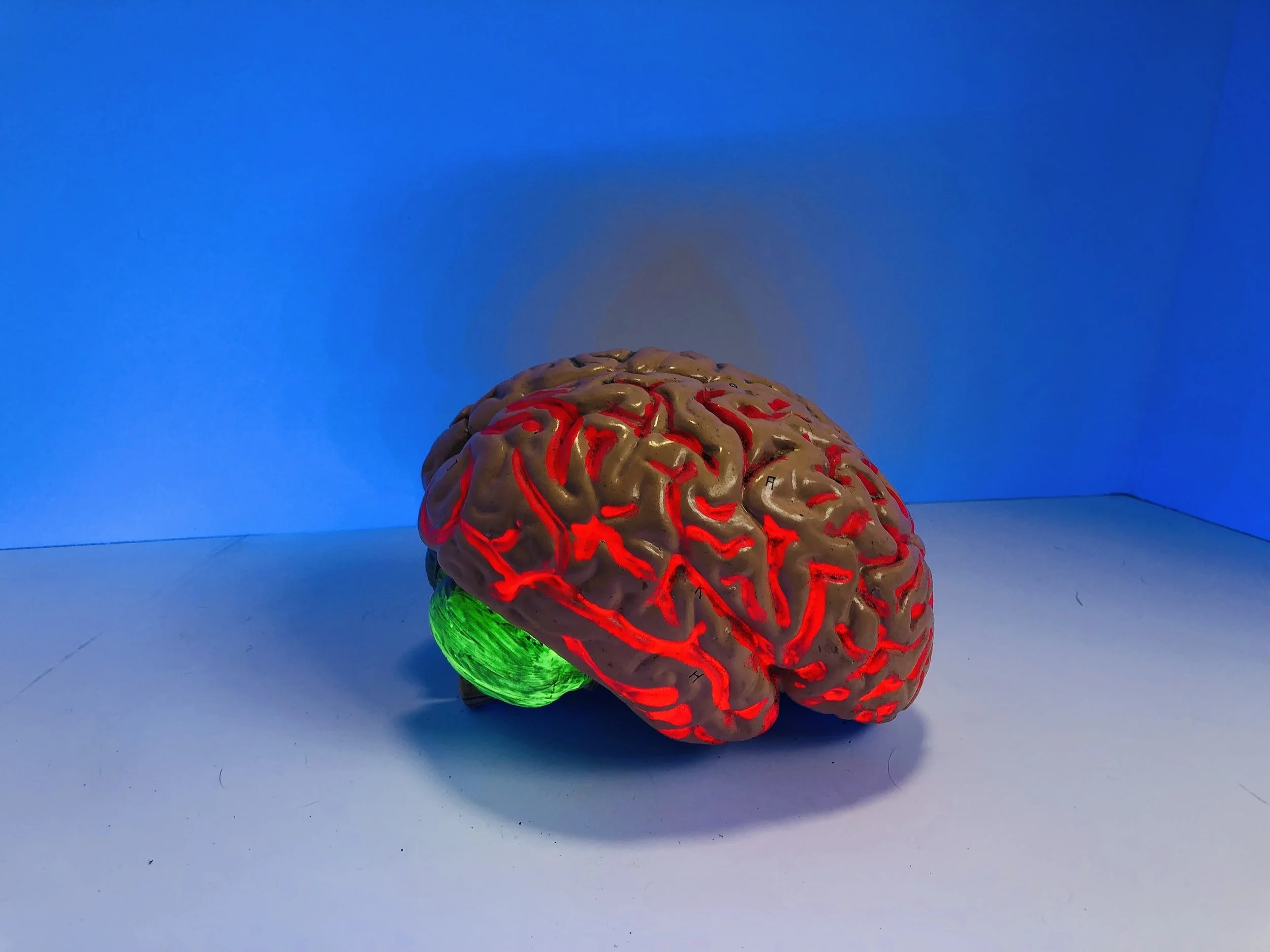
BREAKING NEWS: AI GENERATED THERAPIST APPLIES TO BE AN ACCREDITED EMDR PRACTITIONER (APRIL 2023)
Well not quite yet, so breathe a sigh of relief. Your job is safe for a while!
What about five years from now? Not so sure, as it’s quite likely, based on current developments, that there will be AI generated EMDR therapists at work in five years’ time.
As I, (Richard Worthing-Davies), wrote in the EMDR Therapy quarterly (Winter 2021), the rapid development of AI (Artificial Intelligence) is likely to be highly disruptive in health care diagnosis and delivery over the coming years.

UNDERSTANDING ‘PARTS’ AND THEIR TREATMENT FROM A STRUCTURAL DISSOCIATION PERSPECTIVE. (OCTOBER 2022)
Dissociation is a process of emotional distancing often experienced by people undergoing a traumatic experience. It is also commonly experienced by clients during an abreaction to the trauma. This is distinct from Dissociative disorders, a much more serious condition characterised by splitting of the personality into parts - Structural Dissociation.

HEALING PAIN - LATEST CLINICAL TRIAL WITH SENSORIMOTOR INTERVENTION (SEPTEMBER 2022)
Changing the brain is better than prescription drugs for treating back pain.
A new clinical trial provides more evidence that a change of mindset, not prescription drugs, is key to eliminating nagging (chronic) back pain. A paper in The Journal of the American Medical Association, as reported in the London Times, showed long-standing back pain as a ‘modifiable problem of the nervous system rather than a disc, bone or muscle problem’.

Untangling EMDR: What are the EMDR, EMD, EMD(r) AND R-TEP protocols? (MAY 2022)
Marilyn and Richard discuss the apparent confusion in the EMDR world about the EMDR, EMD, EMDR AND R-TEP protocols.

Are you sure about using EMDR with pain? Exploring the latest evidence (March 2022)
This is an important question for EMDR therapists because so many people who have experienced trauma develop chronic pain symptoms. Then, many therapists, EMDR or others, don’t feel confident in dealing with pain. When clients believe that their therapist is confident, pain relief is more marked.

EMDR Gateway reaches a new milestone (February 2022)
We enter 2022 having 40 videos for subscribers to access, showing how use EMDR to address a wide range of important therapeutic needs and making learning easy and fast.

Working with complex Grief – Videos 019, 020 and 021 make learning easy (December 2021)
By early December all three of the videos on Complex Grief will be online, showing how to address the trauma, present triggers and consequential losses associated with the loss of a loved one, and future fears and concerns.

PTSD & CPTSD – What’s the difference and does it matter? (November 2021)
Dr Marilyn Tew, one of EMDR Gateway’s founder members, explains the difference between these two diagnoses and clears away much of the confusion around it. And does it make a difference in terms of treatment, and should we be worried if we come across CPTSD in our clients?

EMDR and Narrative therapy in a case of complex grief. (October 2021)
Systemic therapy seeks to address people not only on the individual level, as had been the focus of earlier forms of therapy, but also as people in relationships, such as in couples, families, workgroups, etc. to effect change and development.

WHICH IS BETTER, THE STANDARD EMDR PROTOCOL OR A-I EMDR PROTOCOL? (SEPTEMBER 2021)
For years there has been a debate about whether the standard EMDR protocol and the application of its eight-phases should be followed rigidly, even to the marginalisation, if not exclusion, of the Attachment-Focused or Attached-Informed EMDR protocol (AI-EMDR) from mainstream thinking and training.

Decision fatigue can damage your clients and you as therapist, (July 2021)
In the course of a therapeutic hour an EMDR therapist may make dozens of decisions from what to target to the appropriateness of the cognitions, the kind of BLS to use, the possibility of needing to take action to avoid client overwhelm and dissociation, and many others. The quality of the therapist’s decision making is crucial in two respects: first and foremost, the well-being of the client depends on it; as far as the therapist is concerned poor decision making may cause serious reputational and financial damage. Which brings me to the real issue that I’ve never seen mentioned in EMDR circles – the reality of decision fatigue as recently highlighted by some unusual research published in the Royal Society Open Finance.

In Praise of EMDR - A must read! (June 2021)
After a lifetime of ups and downs he was committed to hospital under Section 2 of the Mental Health Act. He is Horatio Clare, the bestselling author of numerous books. His essays and reviews appear on BBC radio and in the Financial Times, the Observer and the Spectator. His latest book, Heavy Light – A Journey through Madness, Mania & Healing – is now available; it’s a truly extraordinary account by one of the most brilliant travel writers of our day, of a different sort of travel - one through complete breakdown and severe mental illness.

“Zoom : the good, the bad and the ugly” (May 2021)
Video conferencing platforms such as Zoom and Microsoft Teams made remote working possible as COVID-19 spread. All sort of work including therapy, supervision and training/education that took place in person moved online. This move to online working has had several consequences, which we explore in the following piece.

Mental Health and work? (April 2021)
As reported in the Economist[i], a century of research has shown that unemployment is bad for mental health. Anxiety, depression and lower self-esteem are common afflictions connected with being out of work. But how much work is necessary for good mental health? Not very much according to new research carried out at Cambridge University[ii].

Update on Autism-Spectrum Disorder (ASD) Paradigm Shift (March 2021)
In 2019 (see July post) we reported on research suggesting the absence of certain non-pathogenic bacteria in our bodies may explain the cause of Autism-Spectrum Disorder (ASD) and may lead to its effective treatment.

Four trends that will shape the future of EMDR. (February 2021)
This article is about four trends that have and will continue to shape our lives, our economy and our environment in which we learn and practice EMDR, and organise our EMDR communities.

Serving the community better (September 2020)
We want to increase our capacity to serve the EMDR community by producing more videos to enhance clinical practice.

Getting best value for money (September 2020)
We are a ‘not for profit’ social enterprise company, but to continue investing in new videos we need to increase our standard monthly subscription fee from £5 to £5.99 per month on October 1 2020, but the good news is…

IMPROVING MY CLINICAL PRACTICE (September 2020)
A UK accredited EMDR therapist wrote to emdrgateway recently: “I wanted to thank the Gateway team for having such a positive impact on my clinical practice and consequently on my clients.”

Speed of Eye Movements (April 2020)
Introduction
A recent Jiscmail thread on the speed of eye movements in processing set a hare chasing in my brain and stimulated me to do some research. I thought our readers might be interested in my reflections as a springboard to their own thoughts rather than as a definitive treatise on the subject.
The thread began with a very interesting question from Dr Ruth Armstong ‘Does anyone know of any studies into the use of slow vs fast BLS or into the number used per set?